1
Grown-ups forget the count
How many times has he saved? Nobody could quite remember. A promise nobody can remember soon stops being believed.
Our story
Not with a market, a framework or a pitch. With one small, real experiment at home, and a four-year-old who got to decide.
July 2026
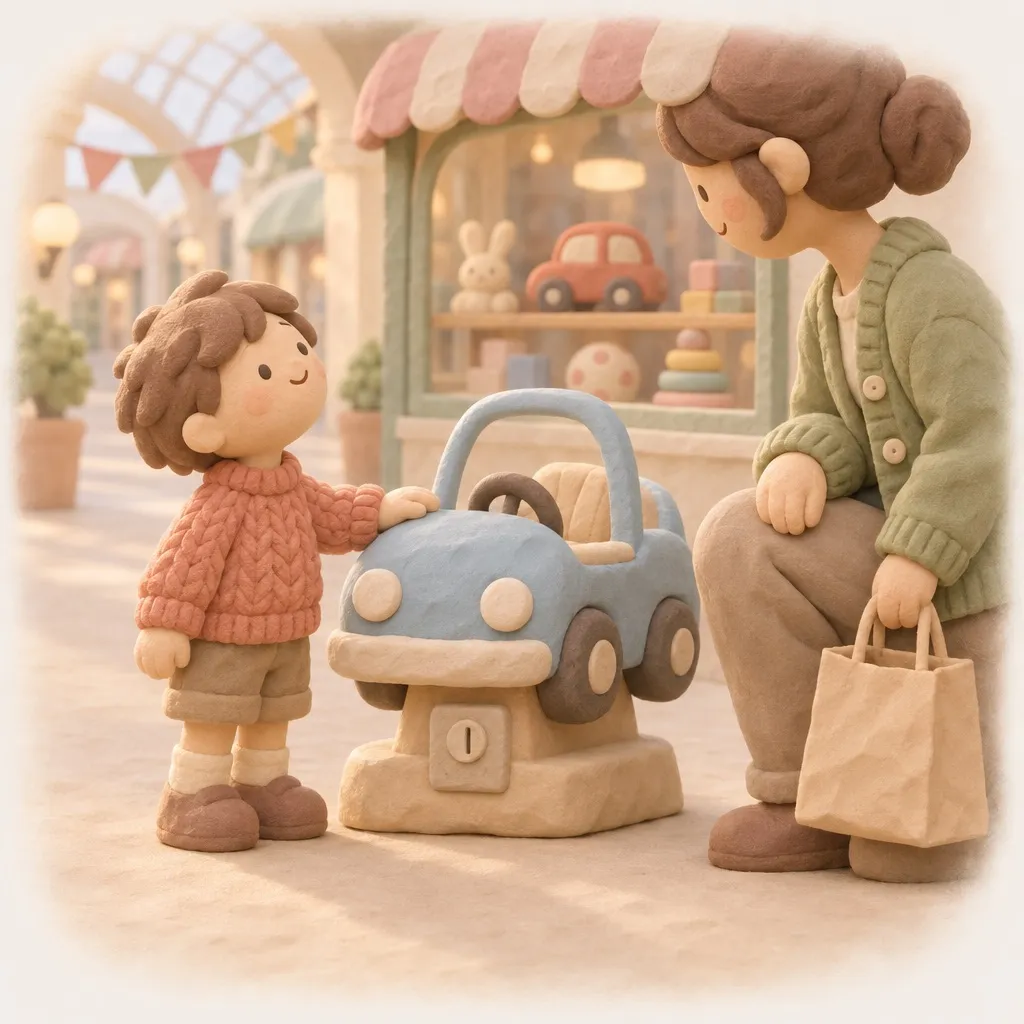
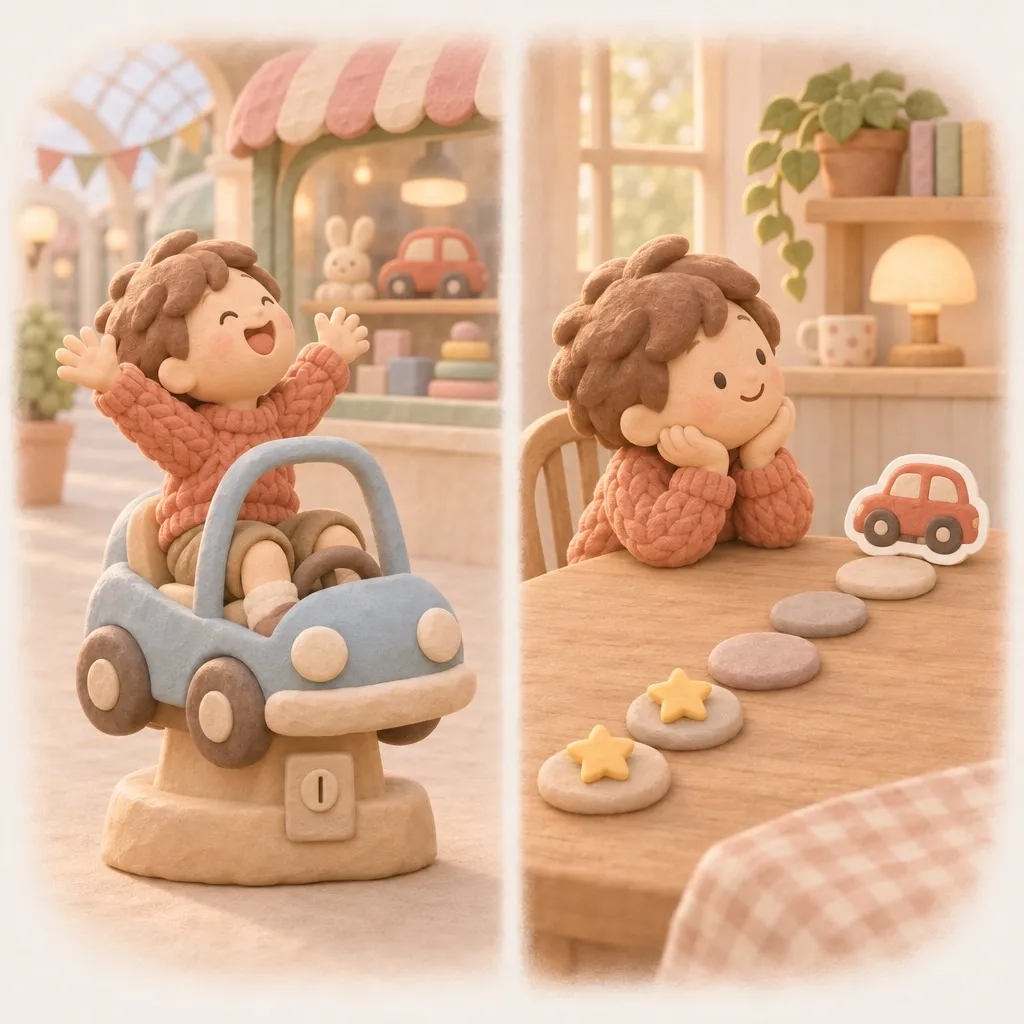
A ride on the ride-on cost 2. A little toy car cost 8. The ride is over in two minutes; the car can be played with for ages, and kept. So the deal was simple: skip four rides, and the car is yours.
He listened. He saved a few times, and in the end he really did buy the car. The most important part, looking back, was that the choice was completely his. Now and then he wanted the ride, and a grown-up asked “Are you sure?”, but nobody chose for him.
Paulo is named after that boy.

4 × 2 = one car
1
How many times has he saved? Nobody could quite remember. A promise nobody can remember soon stops being believed.
2
A wish, a running total, the remarkable fact of “I held back”: to a four-year-old, all of it is invisible. “2” on a screen weighs nothing.
The first big question
Should Paulo only show the choice, trusting the child completely? Or should it try to make saving more attractive, because parents want an app that works? Pick who is looking.
For the child
Paulo shows both choices and what each one does. It recommends nothing, nudges nothing, and records the choice without judging it.
For the grown-up
Paulo helps you be consistent: it remembers the count, keeps the agreement visible, and is there in the moment you’d otherwise have to improvise.
We guide attention. We never steer the decision.
What the research says, and doesn’t
The famous marshmallow test suggested children who waited did better later. A large replication (Watts et al., 2018) found that link shrinks a lot once family background is taken into account. Waiting turns out to be a sensible response to the situation a child is in.
Evidence: High
Waiting depends on the situation. It isn’t a fixed trait, and turning a choice into a moral test is neither scientific nor kind.
So in Paulo: The two options are perfectly symmetrical before the choice. The child is never scored.
Evidence: Medium–high
Children wait longer when the adults around them have just proved reliable (Kidd et al., 2013).
So in Paulo: The stars can’t be quietly changed. A failed save never shows as a success.
Evidence: High
Expected, tangible rewards can weaken a child’s own motivation (Deci et al., 1999).
So in Paulo: Stars are never for chores, good behaviour or kindness.
Evidence: Medium–high
Feedback about the process helps persistence; praising cleverness can backfire (Mueller & Dweck; Brummelman).
So in Paulo: Paulo describes what happened (“I chose this today”), never “you’re so good at waiting”.
Evidence: Medium
Offering choices within limits is the autonomy support most consistently linked to young children’s executive function.
So in Paulo: Grown-ups set the deal; inside it, the child decides.
Evidence: Medium
Remembering their own past kind acts makes 6–8-year-olds more willing to share later; remembering other people’s doesn’t.
So in Paulo: My Trail keeps things your child really did.
What Paulo isn’t
A reward chart
Points turn “I want it” into “I want the points”.
A family promise you can trust
Chores for pocket money
Helping at home is belonging, not a trade.
Money, chores and growing up kept apart
A score for your child
Self-control depends on the moment; an app can’t judge it.
A record of what happened, never of who they are
A sibling leaderboard
Comparison makes a child a number to be beaten.
Each child sees only their own path
Streaks and check-ins
“Don’t break the streak” is fear of losing, aimed at an app.
No daily tasks, no “you haven’t logged in”
A screen game
At 4 to 8, growing up happens off the screen.
A few seconds, then back to the world
A parental control tool
There is no button that says no for you.
Help for grown-ups to stay consistent
An AI that judges
No algorithm gets to say who a child is.
AI only suggests a name for a wish sticker
Paulo has no analytics, on purpose. So we learn from families who tell us:write to us.

iPhone · iOS 17 or later · Free for children, forever